Do you find yourself surrounded by bits of construction paper? Does your child demolish their gorgeous block castle before you can snap a picture? Are they constantly pulling petals off of flowers or picking at the bark on a tree? You are not alone and there is nothing wrong with your child!
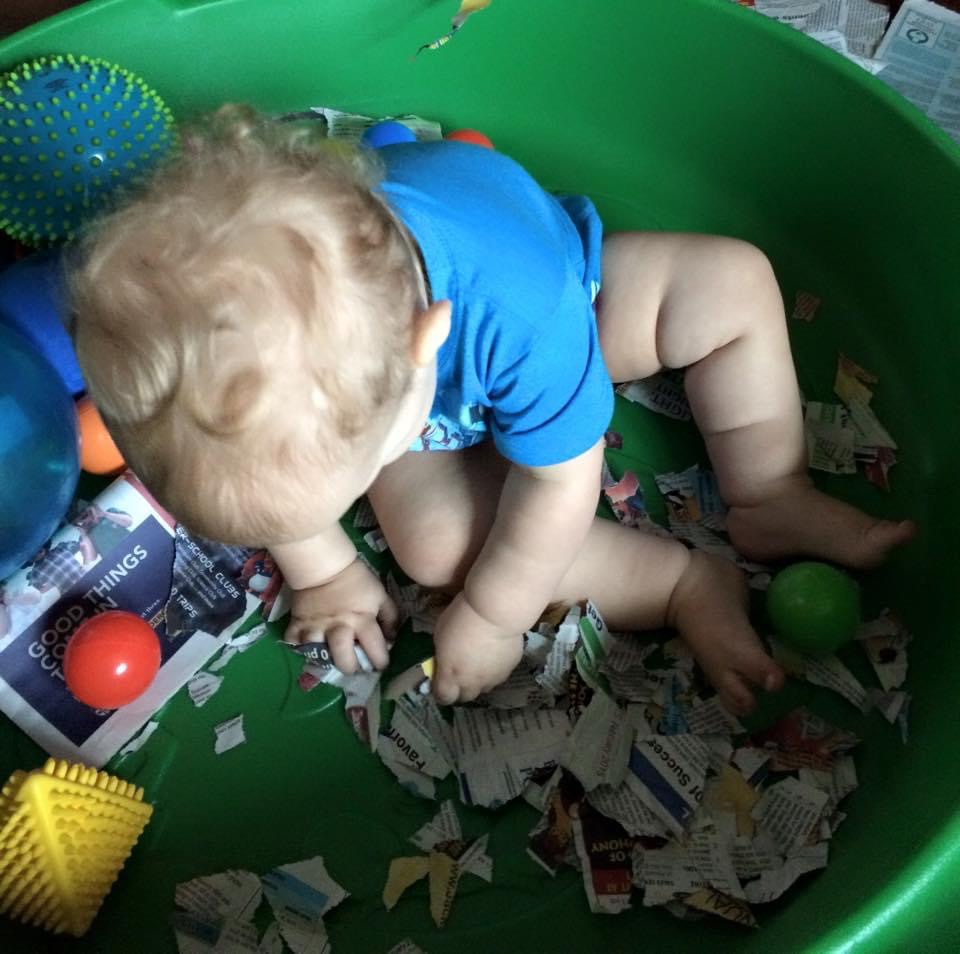
While it is natural to be frustrated by the destruction wrought by your child’s play, demolition is actually an engaging, developmentally appropriate, and satisfying method of play. It scratches the itch of curiosity and allows children to see the inner workings of not only the item they are deconstructing, but the big wide world they live in as well. As an adult, you already have concrete knowledge that things are different on the inside than they are on the outside. Did you know this is something your child must explore to learn? There are so many ways for our small scientists to manipulate the world around them allowing them to investigate the inner workings of different things, we simply need to embrace a less controlled play experience!
Another beautiful side effect of playful demolition is exploration of cause and effect. Watching an item transform (in form, shape, or texture) as they manipulate it allows your child to see how they can impact their surroundings and effect change by their actions. There is a result to every action and different items come apart differently. Petals pluck off a flower differently than a leaf plucks from a bush. Paper tears differently when torn with the grain than against the grain. When children are allowed to demolish they are offered a natural opportunity to tinker and find the most efficient way to destroy an item, a natural scientific exploration of cause and effect. (Play really is a superpower, y’all!)
Now that you understand that there are benefits to the actions of the mini-demolition crew you are raising, let’s look at some ways you can support this powerful avenue of play! First, celebrate destruction. Seriously, build castles and towers and share in your child’s joy as they knock them down. You can also model the joy of deconstruction yourself. Let your child see your joy and curiosity as you pick at, pluck, and pull apart items you find outside or even around your home.
You can take this a step farther and model putting these items back together in new ways. Create a nature collage from the bark and petals you have pulled apart. Use those paper bits to create a mosaic or use them to build up your compost bin!
The last point I will touch on is the fact that even though it is beneficial, there is an appropriate time and place for destruction. If they are playing with peers, encourage your child to ask before they play wrecking ball to their friend’s tower. There are some items that are off limits to your child’s destructive desires. Set clear limits and expectations when certain destructive tools are given. If you are providing access to scissors you need to clearly set boundaries around how they are and are not allowed to use them. When you are in nature a great rule of thumb is to look for treasures on the ground to pull apart instead of plucking flowers off the bush (this will save Grandma’s prize roses next visit). Of course, you could always designate safe bushes for plucking in your yard if you so choose!
When watching your child, try to remember that learning happens when your child is genuinely drawn to their play. Our natural instinct as adults may be to squelch the destructive nature of play, but next time you see your child tearing up their 28th piece of construction paper remember the truly scientific exploration happening (even though it may not look like it)!
Until next time, be your child’s hero and exercise your superpowers – PLAY!
 The Superpower of Play