On the podcast last week, I interviewed S.D. Smith. He is the author of the Green Ember series and my son’s favorite author. There are currently 9 books in the series with a 10th slated for release this spring.
In the interview we talk about his play history, how he feels Play has impacted his adult life, and how good stories impact children’s play.
Listen to The Superpower of Play wherever you listen to podcasts. You can also visit the Listen and Connect page on the website to find it.
We have now entered into 2022 and our family is jumping in with both feet. We have decided that this is going to be a year of play for the whole family, and we are inviting you to join us! So, let’s take a few minutes and look at how we are kicking off 2022, the year of play.
To kick off 2022, we are participating in three challenges. It may sound like a lot, but I promise it isn’t actually overwhelming. The first challenge is something we dabbled with last year but did not actually track – the 1000 Hours Outside challenge. This is a challenge created to help families find the drive to get outside and bring a little old school childhood experience back to our kiddos. Do I think we will hit 1000 hours? I’m not actually sure. Will I remember to track all of our hours this year? Not really sure about that either. Are we going to give it our best effort? Absolutely! If you are interested in joining us in this challenge be sure to check out our FB page and the official 1000 Hours Outside FB page to get ideas and support through the year.
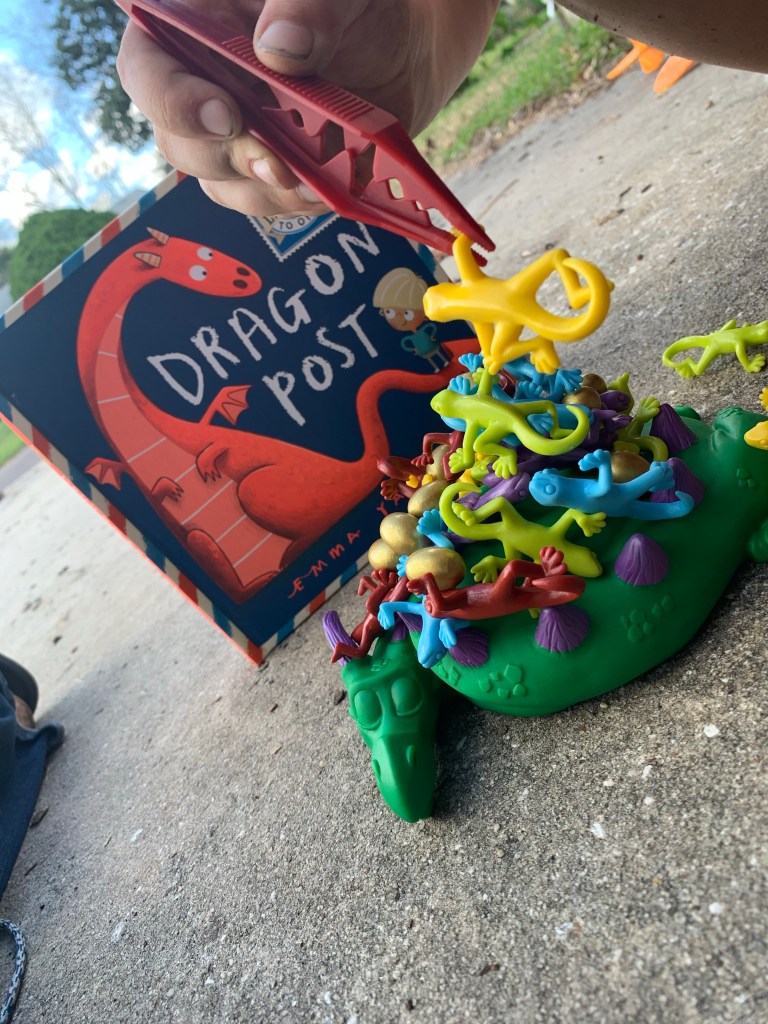
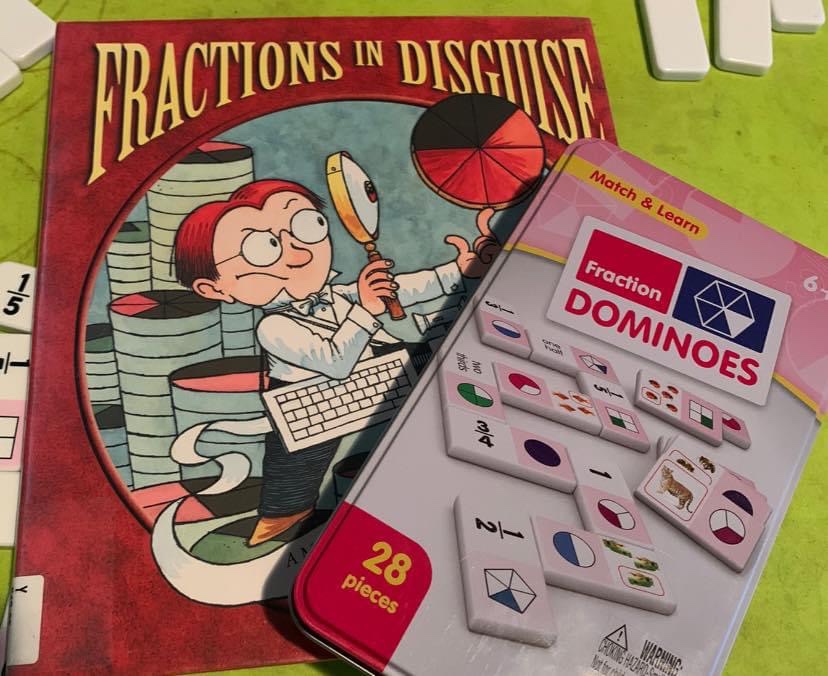
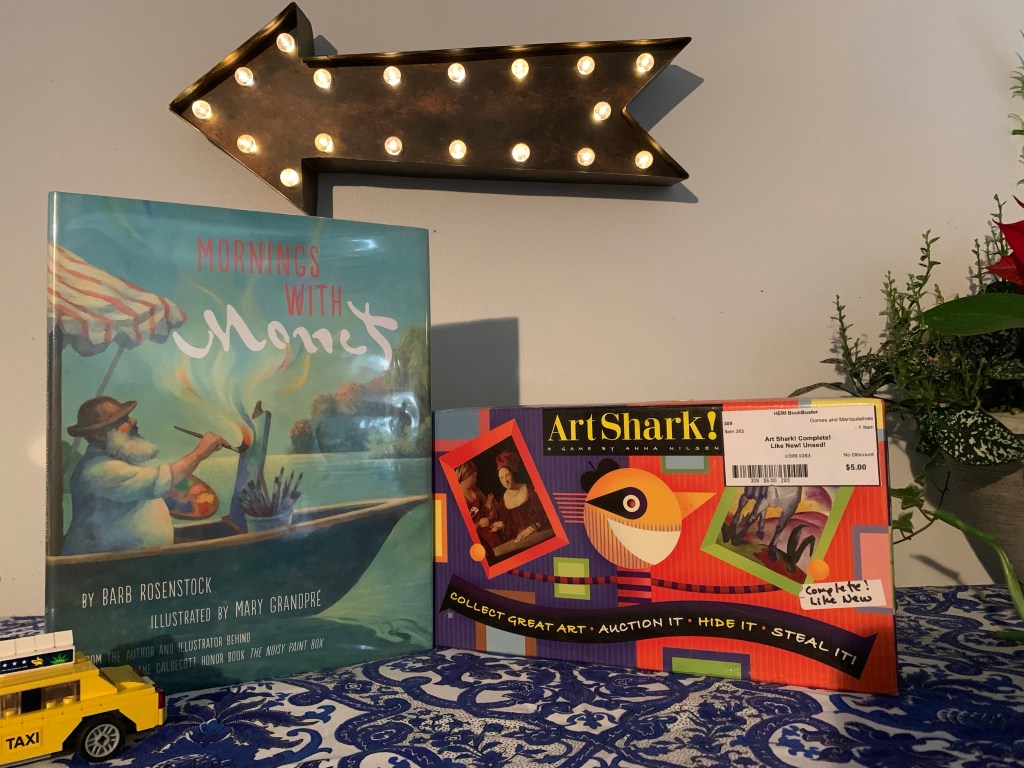
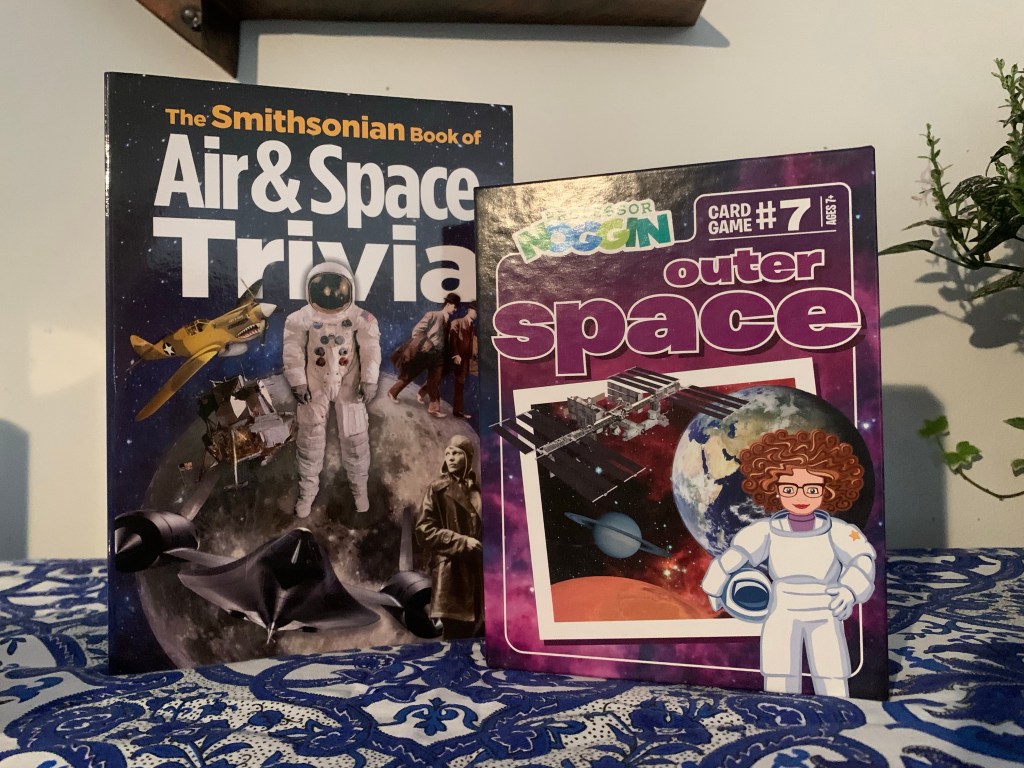
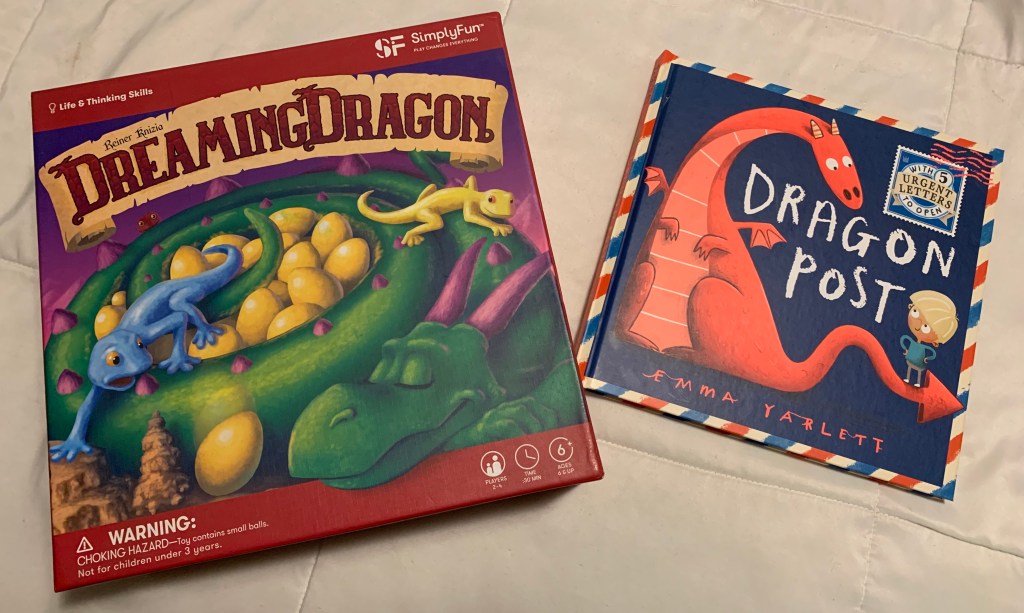
The second challenge we are participating in this month is the #abookandagameaday challenge from our good friends over at The Waldock Way. This challenge is to play at least one game and read one book a day through the month of January. You could coordinate your book and game, you could decide to play the same game every day, pick a chapter book and read a chapter a day – the way you make this happen in your home is really up to you. We generally live our life this way (games and books, books and games, this is our world) so I am challenging us to play a different game each day with a coordinating book. We are kicking it off today by playing Dreaming Dragon and reading Dragon Post – both a lot of fun! If you decide to join us in this challenge, share your selections on social media using #abookandagameaday.
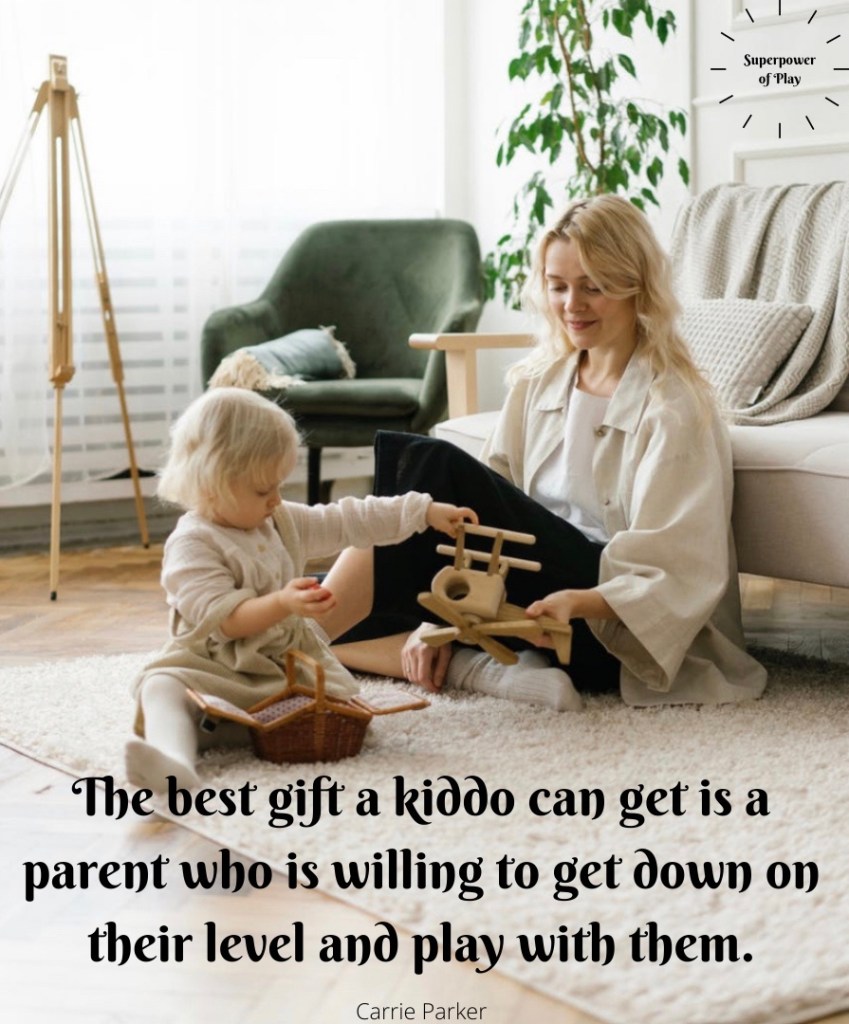
The third and final challenge for the month of January is one we here at The Superpower of Play are hosting. This is the #stopandgiveme30 challenge where we are encouraging you to incorporate at least 30 minutes of unstructured, free play into your child’s day for at least 30 days this month. This can be independent or sibling play, playing at the park, or play with you – as long as it is child led play with no expected outcomes on your end, it counts. I will toss this tidbit out there – it would be amazing for both you and your child if you decide to join them in at least some of their unstructured play time. You may be shocked at the creative juices you see flowing as your kiddo plays and the connections you build during play are absolutely irreplaceable. The best gift a kiddo can get is a parent who is willing to get down on their level and play with them. I look forward to seeing y’all share your play journey this month in the FB group or on your social media using #stopandgiveme30 and #thesuperpowerofplay.
So join me in jumping into 2022 with both feet and kicking off a year of play!
It is the end of the year and I am a little tired. I think we all are. We have been busy, eating all sorts of yummy (read: super sweet) treats, and completely off our routine. We are all a little cranky and, simply put, off kilter.
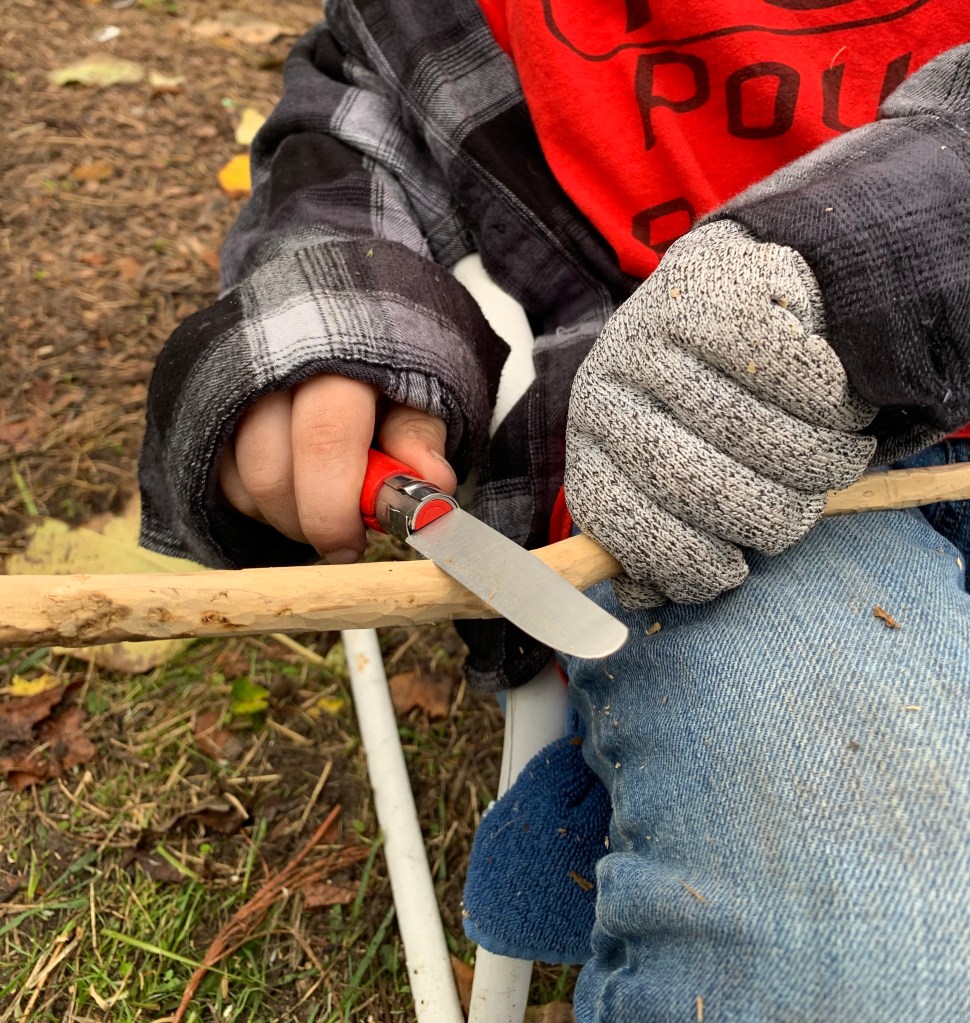
Yesterday, I realized what is missing – organic, unstructured play. We have been so busy having fun, we haven’t had time to have fun. So this morning the youngster and I came outside – no expectations, no plans, just two folks hanging out in the yard – and it was glorious. He played under his climbing dome, dug a trench for army men, and did some whittling (after selecting the perfect branch for a sword, of course). We listened to birds chirp, appreciated the morning fog, and laughed and talked.
Isn’t it so nice when after a busy season we can come back to a routine that feels like home? Play does not have to be elaborate to be powerful. How are you exercising your superpower of play to end this year?
Tis the season for all things pumpkin: pumpkin spice lattes, pumpkin donuts, pumpkin pie, and pumpkin play! Let’s talk about a few of our family’s favorite pumpkin play ideas that might help you make the most of your child’s play this fall.
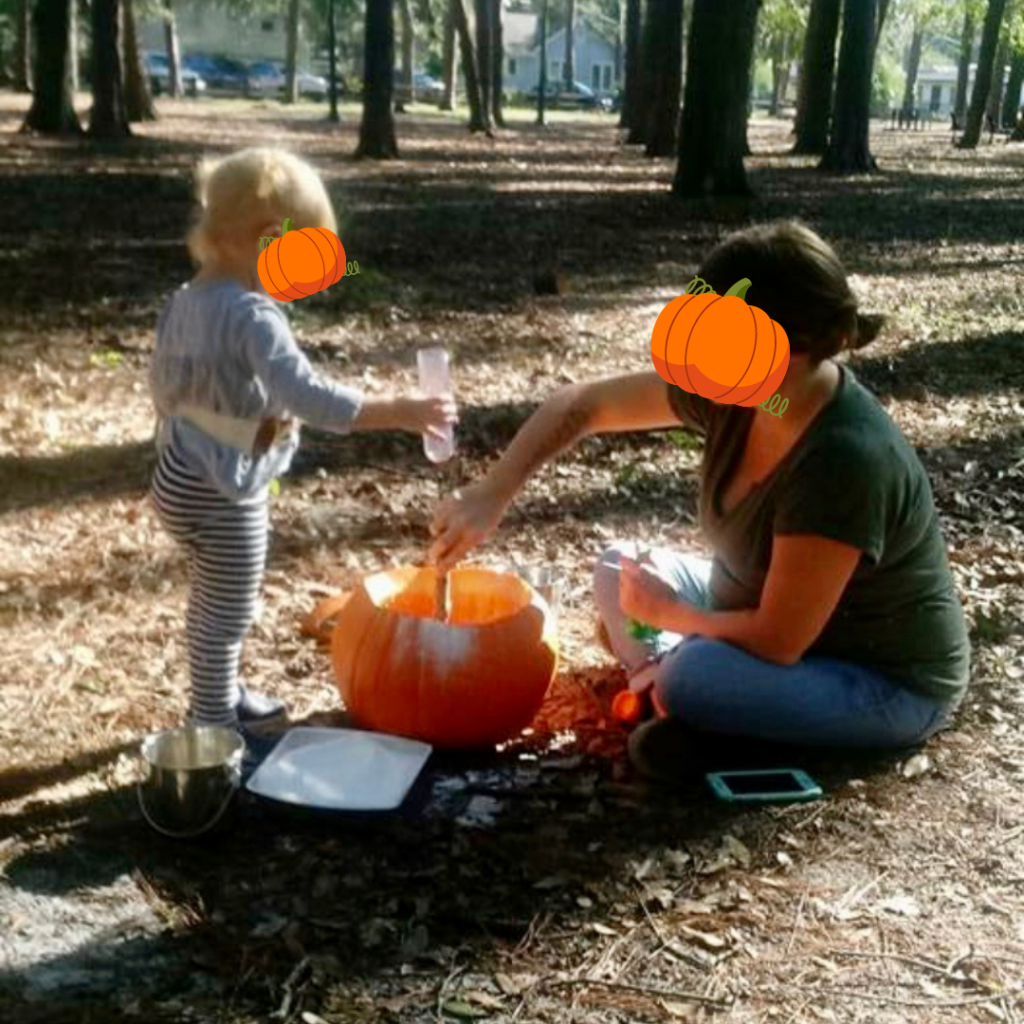
One of our favorite pumpkin activities is best done outdoors and is fabulously messy! (Go figure, I’m recommending something messy and outside!) We like to call it Pumpkin Mad Science and it has held the attention of kiddos from one year old all the way up to fourteen years old and adults as well!
Pumpkin Mad Science
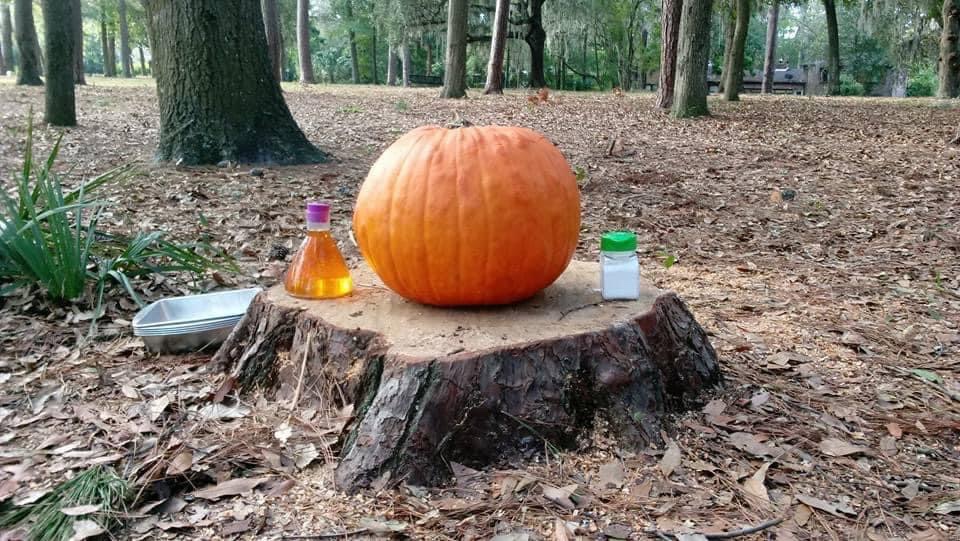
To set up for this activity, open up a decent sized pumpkin. Don’t clean it out though because part of the fun is all the gunk inside. Add a few drops of food coloring to vinegar and get an ample supply of baking soda. The really big bags of baking soda from your local wholesale retailer are great for this activity, I promise you are going to want to have quite a bit on hand.
Provide eye droppers, buckets, scoopers, spoons, and sticks. After that, sit back and watch the experimentation ensue. Better yet, get in there with your kiddo and and experiment along side them!
Another activity we enjoy is the pumpkin art class with Nana from chalkpastel.com (afflink), the videos are truly wonderful and my son loves painting with Nana. There are so many awesome fall options available in the You Are An Artist program and they are fun, quick, simple, and minimal prep work for you beforehand! I definitely recommend checking them out.
The next activity we love is a pumpkin or gourd sensory bin. Take a Rubbermaid tub and pour in dried corn, kinetic sand, green rice, black beans – anything you want for your base medium. Then add in small pumpkins, gourds, scoops, a magnifying glass, and anything else you think might be fun. This is a fun and engaging activity to let your kiddos tinker with while you read them some fun, fall books!
Another great activity is what I like to call, Pumpkin Estimation. Get three pumpkins of different sizes (small, medium, and large) and then ask your child to take a guess at how many seeds might be inside each one. Ask them which one they think holds the most and why they formed that hypothesis. Write it down as your child is telling you their answers, you can even make a chart! Then open up the pumpkins and empty them out into three separate bowls. It is very important you don’t mix the seeds from the pumpkins because the next step is to clean them and count them! Will your kiddo count by ones? Fives? Tens? Let them decide and then total up and compare the seed counts. Want to get a little extra math-y with your pumpkin play? Make a bar graph or use pumpkin stickers to represent a set number of seeds and create a pictograph!
If you really want to blow your child’s mind, teach them how to read the clues on the outside of a pumpkin to learn the secrets on the inside of the pumpkin. Each line on the outside of a pumpkin represents a row of seeds on the inside. The longer a pumpkin grows, the more lines it develops – but it doesn’t necessarily get bigger.
A super yummy activity is to bake pumpkin cookies. You can be as elaborate or as simple as you would like, it is entirely up to you. A basic sugar cookie recipe with pumpkin pie spice mixed in and pumpkin cookie cutters are simple, fun, and yummy. Want to get a little extra crazy with it? Add some red and yellow food coloring and chat about what color you might end up with. Remember, conversations are brain building! If you feel like exercising your inner chef there are many wonderful pumpkin cookie recipes out there using pumpkin from a can or even pumpkin from a, well, pumpkin!
Another awesome activity is to make pumpkin play dough. This one is seriously fun, it is play to make it and then play to use it. Add some pumpkin pie spice and food coloring to the following recipe, add fall cookie cutters, and you have some great play time ahead of you!
Play Dough Recipe
2 cups of flour
1/2 cup of salt
1 cup of hot water (possibly a 1/2 cup more)
2 tablespoon of oil
2 tablespoons of cream of tartar
food coloring
Combine all dry ingredients in a bowl and form a well. Add the oil, food coloring, and water to the dry ingredients. Knead you’re play dough until it reaches the desired consistency.
Something we love to do is have a pumpkin race. Get several small pumpkins and put them in a bucket or inside a hula hoop on the ground. Have your kiddos race them from one side of the room to the other. If you can be outside, even better! If you have an only child, don’t lament yet another activity you can’t do. Time them and have them try to beat their best time! Does taking pumpkins from point A to point B feel a little too simple for your kids? No worries – add obstacles! Pool noodles laid across chairs make for a great low crawl. Set out a few pumpkins or cones and create a weave zone. Your creativity and the sky is the limit when it comes to the obstacles you can set up. Don’t have a way to set up obstacles? That’s ok, too! Have your child frog hop while holding a pumpkin, crab walk with the pumpkin on their tummy, or try to balance a mini pumpkin on their head while they travel from place to place!
You can also have a pumpkin scavenger hunt! Hide the little mini pumpkins all over your house or yard and have your child hunt them Easter egg style. Can’t get a lot of mini pumpkins? No worries, paper pumpkin cut outs work just as well.
Draw or print off the outline of a pumpkin and provide your child with red and orange paint. Encourage them to finger paint – color mixing, the sensory experience, and the motor movement all make this activity a simple power house. Play doesn’t have to be elaborate to be fun!
You can also give your child that same pumpkin outline, orange construction paper, and a squeeze bottle of glue. Let them tear the paper into a million bits and then glue them to the pumpkin mosaic style. Be sure to use the squeeze bottle of glue instead of a glue stick in order to exercise your kiddo’s fine motor muscles.
I only have three more activities to list, And they are all three pretty awesome. Have you considered inviting your children to participate in a little indoor pumpkin launching? Give your child access to pencils, rubber bands, plastic spoons or little cups, and glue (a glue gun works best but definitely requires adult supervision). Let them look at some cool catapults in some books and then design their very own and launch some pumpkins! Well, since you are indoors orange craft pompoms are probably your best bet! Encourage your child to experiment with different designs to see what works best and launches those “pumpkins” farthest. Are you looking to win the super cool parent of the year award? Supersize those catapults and take them outside for some serious pumpkin chucking!
Another absolutely fantastic activity is one that takes forethought and space. Let your children grow their own pumpkins. You will want to check your growing zone to figure out the best time to plant them, but this will definitely be a multi-month activity. It is well worth it though. The absolute pleasure on your child’s face when they pick their own pumpkin out of their yard in the fall is priceless.
Last but not least, set up an invitation to dramatic play with a pumpkin patch. Use some pumpkins, green play scarves, hay bales, a cash register, and some play money to encourage play that will go on and on.
In this busy season that is fast approaching, make sure you are taking time for play in both your child’s day and your own. All of these ideas are fun and themed, but your play doesn’t have to be themed to be worthwhile. Remember, play doesn’t have to be elaborate to be powerful.
If you try any of these ideas, I’d love to hear about it! You can leave a comment here or come join us at the new Superpower of Play Discussion Group on Facebook!
Today let’s talk about the appearance of play in early childhood. Close your eyes for a minute and think about play. What do you see? A game of tag? A child with a doll? Kiddos playing with trucks? Play often looks this way, but what if I told you these aren’t the only behaviors exhibited in play?
All over the world, parents and experts alike see patterns of repeatable behaviors in early childhood play. When children repeat these behaviors in various situations, they are developing physically, emotionally, and mentally. This development helps build your child’s schema, or framework, for future learning. While it may not look like play to you, these behaviors are valuable and should not be simply tolerated, but encouraged!
So, what behaviors am I talking about? Some of the common behaviors are rotation/circulation, trajectory, enclosing/enveloping, positioning, connecting and transforming. Over the next couple of weeks, let’s examine these each individually and some activities that can help you support your child in their exploration! Today we will start with circulation/rotation.
Just a kiddo developing her body awareness!
Spinning, rolling, and swinging, oh my! The vestibular, proprioceptive, auditory, and visual senses work together. These labels designate important sensory systems in humans that often work behind the scenes, shaping the way our body takes in and processes information. The vestibular system controls a person’s balance, posture, gaze stabilization, and spatial orientation.
Spinning in circles is a fantastic activity allowing children to gain body awareness and figure out where their “center” is located. This allows them to perform cross body skills down the road like following a line of text across the page, writing, and even throwing a ball!
When your child spins on the swing, rides a merry-go-round at the playground, or uses a Playschool Sit n Spins at home (Aff. Link: https://amzn.to/3a7auIk ), the centrifugal force activates the fluid-filled cavities in the inner ear. This allows the brain to determine the orientation of the head which in turn develops grounding and sustained attention to a task at hand.
Remember, if children incessantly spin in circles, it is because their bodies crave that stimulation. If they roll and tumble and stand on their heads, it is because they need that sensory input. Create spaces where they can do these activities anytime the need arises. If your child is having a hard time focusing or simply seems off, sending them to spin or swing can often help bring them back to a space of focus and self control. (Play really is a superpower, y’all.)
Now that you know what it is (and that the spinning top you are raising isn’t broken), how can you support this method of play? I’m so glad you asked! Providing plenty of opportunities for your child to get this type of input is the first step. Play scarves for twirling, hula hoops, jump ropes, tumbling mats, crash pads, balance boards, exercise balls, and grassy hills are all wonderful tools to use in your play arsenal.
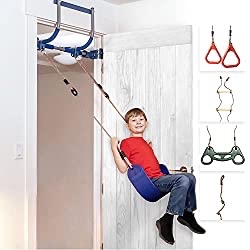
An indoor swing, like the Gym One, is amazing! We have one in our home and it has served us wonderfully. We read Mr. Popper’s Penguins as a read aloud in one sitting while my son used the swing one day. It is also a really nice tool to have for those moments when you can just feel the energy radiating from your little one’s body and getting outdoors is simply not an option. It is absolutely fantastic and I can not recommend it enough! (Aff. Link: https://amzn.to/2YgZPYW )
If you have met one child, you have met one child. When I say this I simply mean, all children are their own individual human beings and will develop and experience the world at their own pace, in their own way. Some children will dabble in multiple behaviors at once and some will take a deep dive into one behavior and then over time begin to explore another. Be a student of your child, study them, learn their quirks and preferences and you will develop a bond and life together that feels smoother and more enjoyable.
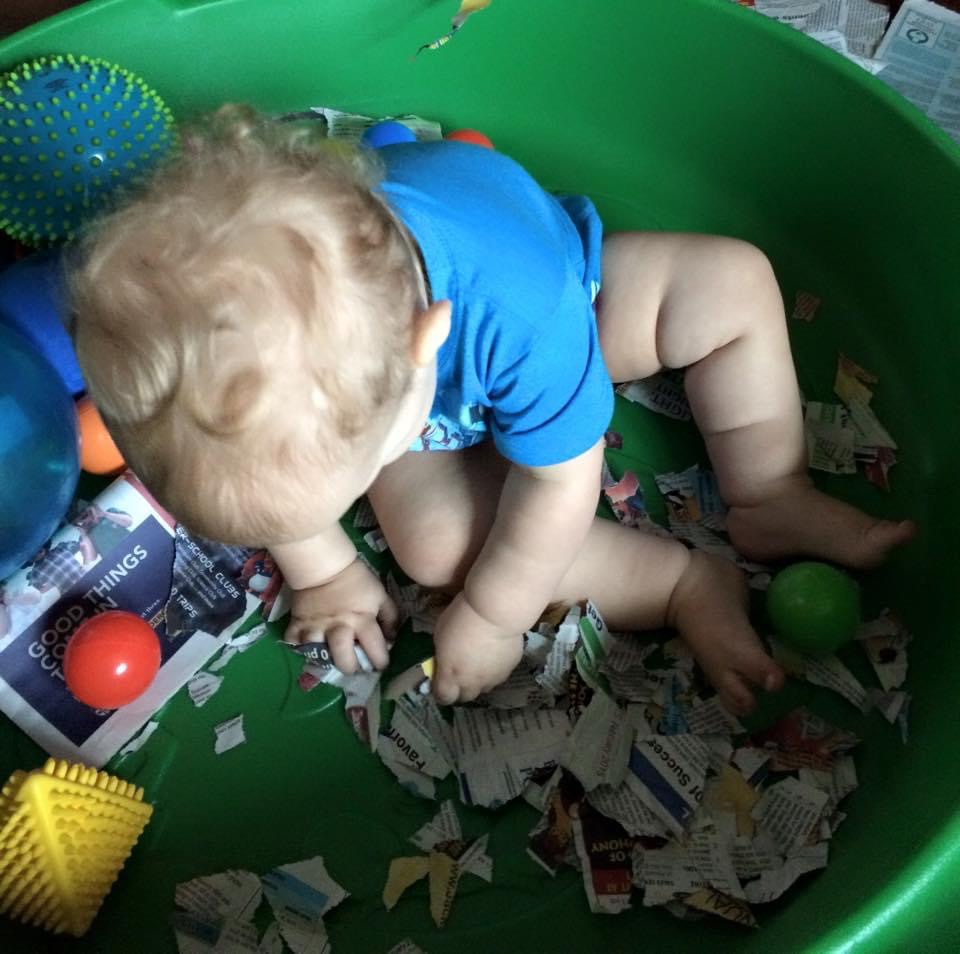
Do you find yourself surrounded by bits of construction paper? Does your child demolish their gorgeous block castle before you can snap a picture? Are they constantly pulling petals off of flowers or picking at the bark on a tree? You are not alone and there is nothing wrong with your child!
While it is natural to be frustrated by the destruction wrought by your child’s play, demolition is actually an engaging, developmentally appropriate, and satisfying method of play. It scratches the itch of curiosity and allows children to see the inner workings of not only the item they are deconstructing, but the big wide world they live in as well. As an adult, you already have concrete knowledge that things are different on the inside than they are on the outside. Did you know this is something your child must explore to learn? There are so many ways for our small scientists to manipulate the world around them allowing them to investigate the inner workings of different things, we simply need to embrace a less controlled play experience!
Another beautiful side effect of playful demolition is exploration of cause and effect. Watching an item transform (in form, shape, or texture) as they manipulate it allows your child to see how they can impact their surroundings and effect change by their actions. There is a result to every action and different items come apart differently. Petals pluck off a flower differently than a leaf plucks from a bush. Paper tears differently when torn with the grain than against the grain. When children are allowed to demolish they are offered a natural opportunity to tinker and find the most efficient way to destroy an item, a natural scientific exploration of cause and effect. (Play really is a superpower, y’all!)
Now that you understand that there are benefits to the actions of the mini-demolition crew you are raising, let’s look at some ways you can support this powerful avenue of play! First, celebrate destruction. Seriously, build castles and towers and share in your child’s joy as they knock them down. You can also model the joy of deconstruction yourself. Let your child see your joy and curiosity as you pick at, pluck, and pull apart items you find outside or even around your home.
You can take this a step farther and model putting these items back together in new ways. Create a nature collage from the bark and petals you have pulled apart. Use those paper bits to create a mosaic or use them to build up your compost bin!
The last point I will touch on is the fact that even though it is beneficial, there is an appropriate time and place for destruction. If they are playing with peers, encourage your child to ask before they play wrecking ball to their friend’s tower. There are some items that are off limits to your child’s destructive desires. Set clear limits and expectations when certain destructive tools are given. If you are providing access to scissors you need to clearly set boundaries around how they are and are not allowed to use them. When you are in nature a great rule of thumb is to look for treasures on the ground to pull apart instead of plucking flowers off the bush (this will save Grandma’s prize roses next visit). Of course, you could always designate safe bushes for plucking in your yard if you so choose!
When watching your child, try to remember that learning happens when your child is genuinely drawn to their play. Our natural instinct as adults may be to squelch the destructive nature of play, but next time you see your child tearing up their 28th piece of construction paper remember the truly scientific exploration happening (even though it may not look like it)!
Until next time, be your child’s hero and exercise your superpowers – PLAY!
Although learning takes place throughout the life cycle, the greatest opportunities and the greatest risks occur during the first years of life. An individual’s capacity to learn and to thrive depends on an interplay between nature and nurture. It is not either/or; it is definitely ‘and’. Children are either stifled or given wings depending upon the experiences they are afforded and the only thing they know about the impossible is what we teach them.
I saw a meme recently that said being a parent is basically telling your child they can be anything they want to be and then yelling, “No! Stop! Don’t do that!” the rest of the time. At first I laughed – trust me, I’ve been there, toddler on the bigkid play equipment anyone? Play structures of death, I’m telling you! But I digress. After I finished giggling I started thinking about that meme though. I just couldn’t help but think of how easy it is to parent from a platform of safety and convenience, but bravery must be mirrored.
It is absolutely integral to your child’s development to allow calculated risks and opportunities to make messes and mistakes. It is said that creativity is the willingness to make mistakes, art is knowing which ones to keep. Children who are not afforded the opportunity to make mistakes will be unwilling to make them as adults. They will also never learn which ones to keep. Be brave enough to cultivate creative souls. Be brave enough to raise artists.
To quote one of my favorite teachers, “take chances, make mistakes, and get messy.” Depending on your age, you may be too young to be acquainted with the original Magic School Bus. One of my proudest mom moments was my 4 year old telling me I was cooler than “the Frizz”. Mom goals attained right there, I’m telling you!
Albert Einstein said that play is the highest form of research. You know what? He was right. Play is not frivolous, it is brain building. By definition play is intrinsically motivated. People and many animals engage in it just because. It is fun. It brings joy. It is how we discover the inner workings of this crazy thing we call life and the world we live in.
Did you know play is essential for healthy brain development? A schema is a set of ideas that your brain uses to perceive and interpret new information. Your schema is determined by the people you meet, things you’ve done, places you’ve gone, books you’ve read – basically everything you experience. I like to describe your schema this way – our brain is like a filing cabinet and all the experiences we have during our formative years are the hanging file folders providing us space to fill in information down the road.
One of the things that really stuck with me from my schooling relates to the time it takes for a new synapse to form in the brain. 400 repetitions. Let that sink in. 400 repetitions. UNLESS. (Can you feel me pulling out my inner Lorax here?) Unless it is learned via play. When you are learning through play a new synapse can be formed in 15 to 20 repetitions. That is the power of play, my friends.
Information obtained through play is recalled with greater accuracy and with more consistency than information given through direct instruction. I am a firm believer in the power of play!
Another benefit of play is that it helps reduce obesity and associated diseases. Toddlers with plenty of chances to run, jump, and climb grow into kids who are physically confident and are more likely to be active and healthy adults. When you allow your toddler to climb play equipment, jump in puddles, and run around like their hair is on fire they are able to develop a level of body awareness that is increasingly lacking in a screen heavy society.
Play also helps children manage stress. Children who have meaningful, child-led play interactions with adults experience a reduction in cortisol. The American Academy of Pediatrics stayed, “In addition to boosting a child’s health and development, play helps to build the safe, stable and nurturing relationships that buffer against toxic stress and build social-emotional resilience.”
If you want to strengthen your family bond, PLAY! It will boost relationship between children and their adult every time. Conversations during play are brain building. They encourage your child’s ability to respond appropriately to another’s feelings. This in turn helps children learn to regulate their emotions when things don’t go as planned down the road.
The last benefit of play I will cover today is it’s contribution to building a child’s academic skills. While this should truly be the least of our worries, it is often what people worry about the most. Improvisational pretend play, not direct instruction, is what feeds both language development and general knowledge.
When you play with your child and chat, they hear your words and are building their vocabulary. When they hear your sentences, they are learning the structure and mechanics of our language. When you play blocks and count the blocks in a tower, your child is learning about one-to-one correlation and number sense. When your child inevitably knocks over the tower you just built, they are learning about cause and effect! The power of play, my friends!
So why do we play? To learn. To grow. To live. Until next time, be your child’s hero and exercise your superpowers – PLAY!



 The Superpower of Play